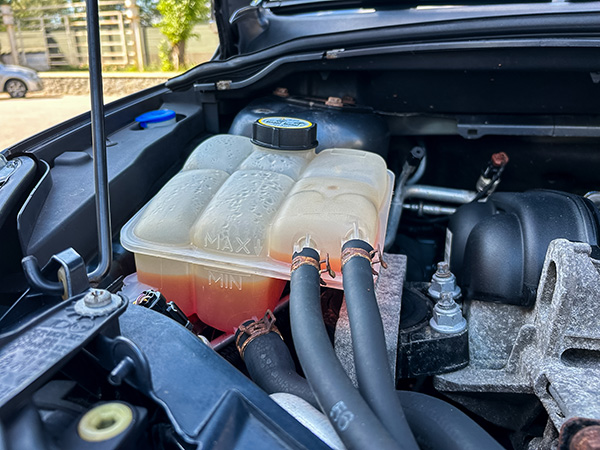
EVs don’t burn fuel, but they still generate heat, and they still need a way to move that heat around. Coolant is the A/C for the battery, power electronics, and drive unit, especially when the weather is hot or you’re fast-charging.
If coolant service gets skipped, the car may seem fine for a long time, then start showing little changes that are easy to misread.
Over time, those little changes can add up.
EV Coolant Change Basics
EV coolant is there to transfer heat and protect internal passages from corrosion. It circulates through tight channels, pumps, and heat exchangers that are designed around a specific coolant chemistry, not just any green bottle off the shelf.
As coolant ages, additives that prevent corrosion and deposits gradually weaken. That does not always cause a sudden failure, but it can reduce the system’s margin when the vehicle is pushed harder.
What Old Coolant Does In EVs
Old coolant can carry fine particles, and those particles can settle in places that restrict flow. When the flow drops, heat transfer drops too, which can make the system work harder to keep temperatures stable.
Even when the car still feels normal, the cooling system may be running closer to its limits. In warm weather, that lost buffer can be the difference between normal operation and the vehicle dialing back power to protect itself.
EV Cooling System Warning Signs
Skipping coolant service usually shows up as patterns, not one dramatic symptom. Drivers often notice changes during hotter weeks, long drives, or faster charging sessions when the cooling system is working hardest.
Here are signs that can point to EV cooling trouble:
- Cooling-related messages that come and go, especially after longer drives
- Cabin A/C or heat that feels inconsistent compared to last season
- Fans running more often or sounding louder during routine driving
- Fast charging speeds are dropping more than you’d expect
- Coolant level is slowly trending down over time, hinting at seepage
- Coolant issues warning light or messages
If you’re seeing any of these repeat, an inspection is the safest next step.
Battery And Drive Unit Heat Stress
When an EV runs hotter than it should, the vehicle protects itself by limiting performance. That can feel like reduced power, slower charging, or a system that seems more sensitive to heat than it used to be.
Heat management also matters for longevity. Batteries and electronics like cooler temperatures. If the cooling system loses efficiency because the coolant is old or contaminated, thermal stress will increase over time, even if you never see a dramatic warning light.
When To Change EV Coolant
The right interval depends on the manufacturer, because EV cooling systems are not all built the same. Some have multiple coolant loops, and some use specific coolant types that are designed for long service life. That said, “long life” still has an endpoint, especially if the vehicle sees frequent fast charging, high heat, or constant highway use.
It helps to treat coolant service as regular maintenance, similar to how you’d treat brake fluid or a cabin filter schedule. The goal is keeping the system clean and protective, not waiting until the vehicle starts self-limiting.
Get EV Coolant Service in Montello, WI with Northside Automotive
We will check your EV’s cooling system, verify the correct coolant type and procedure for your model, and complete the service with a clean, careful refill at Northside Automotive. We’ll also look for small seepage points and cooling system wear that can show up with age.
Schedule your coolant service today and we’ll help you keep EV temperatures steady and avoid heat-related surprises.