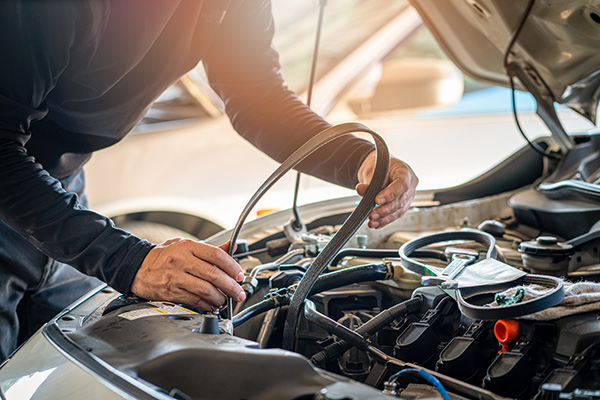
A serpentine belt can look like a simple strip of rubber, but it drives some of the systems you depend on every day. Depending on the vehicle, that belt can turn the alternator, water pump, power steering pump, and A/C compressor.
Wisconsin winters are hard on old rubber. Cold temperatures make a worn belt less flexible, while snow, road salt, moisture, and repeated cold starts add more stress. If the belt is already showing its age in fall, winter can be the season that finally pushes it too far.
1. The Belt Is Cracked, Frayed, or Missing Pieces
Visible damage is one of the clearest reasons to take a serpentine belt seriously. Small cracks between the ribs, frayed edges, missing chunks of rubber, or sections that look chewed up all tell us the belt has been through a lot of heat and movement.
At our shop, we look beyond the top surface. The ribbed side does most of the work, and damage there can be easier to miss. If the belt is starting to separate or cords are becoming visible, don't push the replacement into another winter.
2. You Hear Squealing or Chirping on Cold Starts
A belt that squeals for a few seconds on a cold morning is not something we automatically ignore. Cold weather changes the flexibility of the rubber and can make a weak belt, worn tensioner, or misaligned pulley much easier to hear.
Chirping is often a little different from a long squeal. It can point toward alignment trouble, a pulley issue, or one section of the belt not tracking correctly. We listen to when the noise happens and how it changes with engine speed before deciding whether the belt itself is the only problem.
3. The Belt Looks Shiny or Glazed
A healthy serpentine belt should have a normal rubber surface with defined ribs. If it looks unusually shiny or slick, the belt has likely been slipping against one or more pulleys.
That slipping creates heat and wears the belt faster. A weak tensioner, seized pulley, worn bearing, or contamination can all contribute. During an inspection, we check belt tension and pulley condition so a new belt doesn't get installed into the same problem and start glazing again.
4. Oil or Coolant Has Contaminated the Belt
Serpentine belts are designed to run dry. Engine oil, coolant, power steering fluid, or another leak can soften the rubber, swell it, or make it slip.
Common warning signs include:
- A belt that looks wet or sticky
- Rubber that feels unusually soft
- Sections of the belt swelling
- Repeated squealing
- Rubber dust around the pulleys
- Fluid residue near the belt path
If we find contamination, we look for the leak before replacing the belt. Installing a fresh belt while oil or coolant is still dripping onto it only shortens the replacement's life.
5. The Belt Tensioner Is Bouncing or Making Noise
The tensioner keeps the serpentine belt tight enough to stay in contact with the pulleys. As the tensioner wears, its spring can weaken, or the bearing inside the pulley can become rough.
You might see the tensioner arm moving excessively while the engine runs or hear rattling, grinding, or chirping from the pulley area. A new belt cannot compensate for a tensioner that no longer controls it properly. If the tensioner is weak or the pulley bearing is failing, you need to address both parts together.
Cold Weather Can Expose a Belt That Was Already Weak
A belt that made it through summer can still be close to the end of its service life. Heat hardens rubber over time, and once temperatures drop, that hardened material has less flexibility.
Cold starts also put immediate load on the alternator as it works to recharge the battery after cranking. If the belt is already slipping or the tensioner is weak, that extra load can bring the problem to the surface. Regular maintenance before winter gives you a chance to catch wear before the belt is asked to work in the harshest conditions.
A Broken Belt Can Shut Down More Than One System
What happens after a serpentine belt breaks depends on the vehicle. The alternator can stop charging, power steering assist can disappear on hydraulic systems, and some engines can lose water pump operation.
That can leave you stranded quickly or cause the engine to overheat if you keep driving. If the battery light comes on, steering suddenly gets heavy, or the temperature starts rising at the same time as a belt noise, shut the vehicle down and have it checked rather than trying to make it home.
Get Serpentine Belt Service In Montello, WI, With Northside Automotive
If your serpentine belt is cracked, noisy, glazed, contaminated, or showing signs of poor tension, Northside Automotive in Montello, WI, can inspect the belt, tensioner, pulleys, and related components before winter puts more stress on the system.
Schedule a belt inspection before cold Wisconsin weather turns an aging belt into a roadside breakdown.